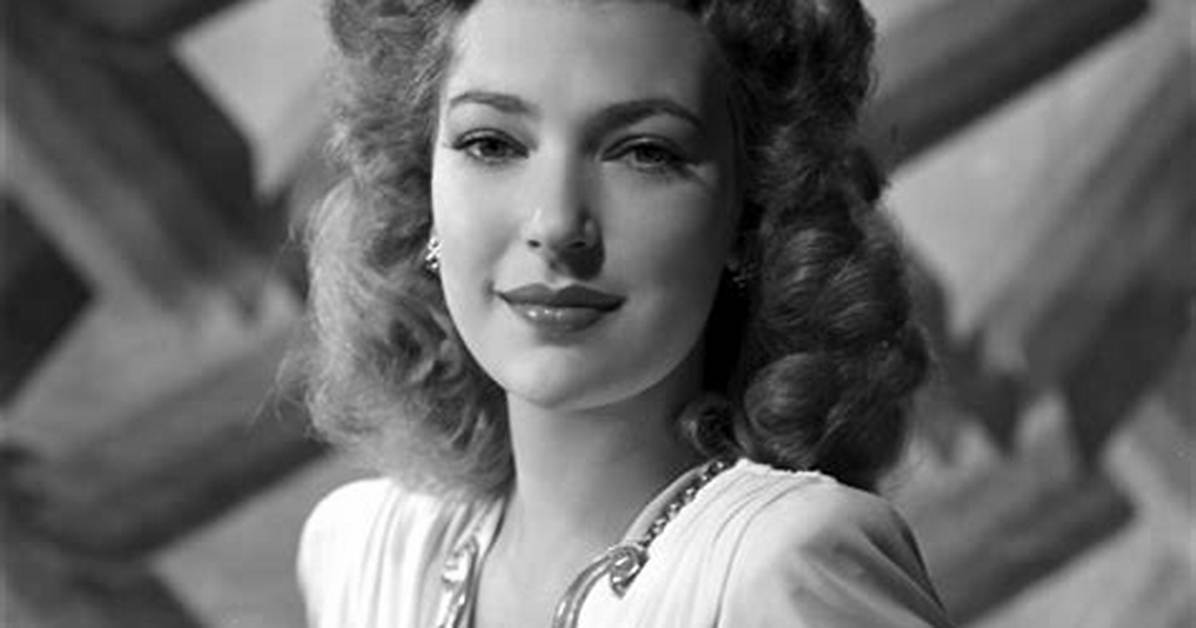
She married her first husband Frederick Beauchamp, a wealthy Harley Street Doctor, in 1935, but they divorced in 1942 when his jealousy of her film stardom had eroded their marriage. She married for a second time in October 1948 to George Moffett, Jr., a wealthy sportsman. They had two daughters, but divorced in 1965.
Korda took charge of her career after this point and brought her to Hollywood where he set her asking price at $50,000 per film. However, as Duprez had not yet achieved the level of popularity in America that she had in Britain, this tactic only served to place her out of contention for most roles. When she was finally released from Korda's contract, she appeared in such low budget fare as They Raid by Night (1942), Little Tokyo, U.S.A. (1942), and Tiger Fangs (1943). Clifford Odets' grim None But the Lonely Heart (1944), in which she co-starred with Cary Grant and Ethel Barrymore, commenced a brief return to films of higher production values. Duprez joined a top ensemble cast in René Clair's film version of Agatha Christie's And Then There Were None (1945). That same year, she appeared opposite John Loder in The Brighton Strangler. In the film noir Calcutta (1947), she starred with Alan Ladd, Gail Russell, and william Bendix.
On 10 September 1944, Duprez starred in "Forever Walking Free," an episode of Silver Theater on CBS radio. She also starred in the June 20, 1946 episode of Suspense, titled "Your Devoted Wife," also on CBS radio.
After a few more motion pictures, Duprez moved to New York City for a brief career on and off Broadway. She appeared in "The Last Tycoon," an episode of the Robert Montgomery Presents television show in 1951, and her final credited film performance was in One Plus One (1961), also titled Exploring the Kinsey Reports.
She died there, after a long period of illness on 30 October 1984 at age 66.

