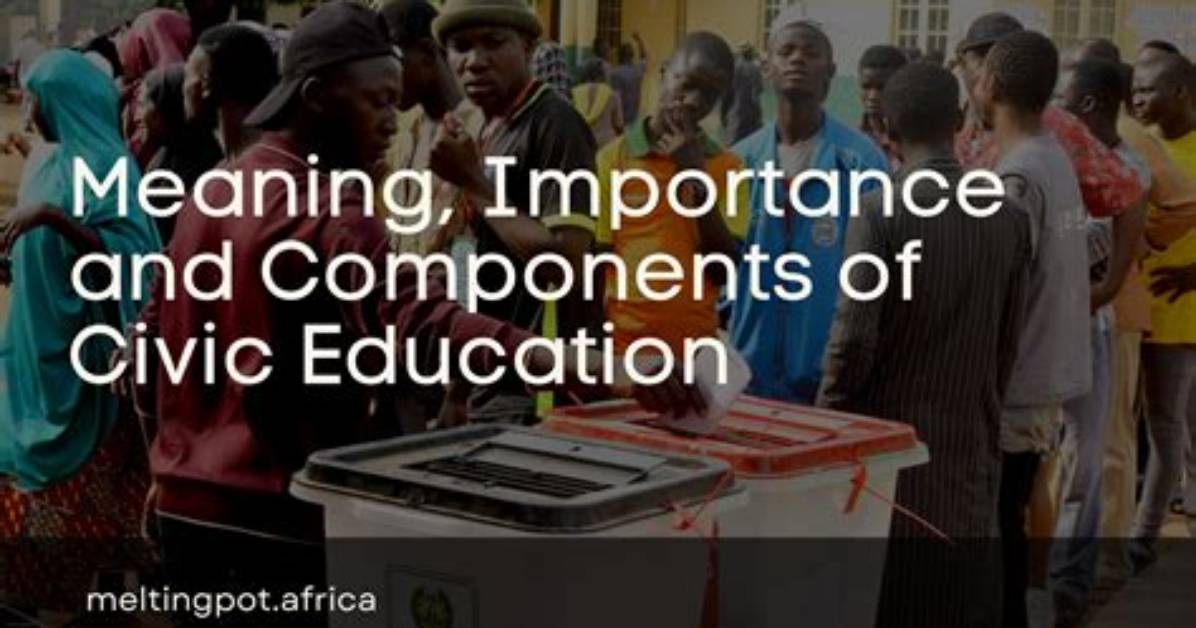
What is the importance of civic education in Nigerian schools? The main task of civic education is the preparation of children for the future, the task of educating future citizens of our country. Many teachers sincerely wishing for the democratic development of Nigeria have been making efforts both to introduce school subjects that will help the young ones develop self-management and other life skills that will help prepare them for the future.
Why do we study civic education?
The purpose of each state civic program should be the creation of an effective system of ethical and legal education that would contribute to:
- the formation and development of humanistic personal orientations;
- the formation of legal and political culture among schoolchildren;
- the development of their democratic way of thinking and the acquisition of a complex ethical, legal and political knowledge, skills and abilities and the experience that young people need to integrate into a democratic society, for their active participation in the social life of the country and the protection of the rule of law.
Implementation of this system must be facilitated by the creation of a holistic educational and methodical complex.
Today, the following components of the system of civic education in the school are distinguished:
- Ethical and legal education.
- Mastering skills and abilities to assert active citizenship.
- Social practice.
Work in this direction is actively supported by the Council of Europe, whose tasks include educating the younger generation towards democratic citizenship based on the priority of human rights.
This work is connected with the education of the teachers themselves, that's why a whole network of groups of teachers is gradually being created in our country, including those that work in the system of retraining secondary school teachers.
Let us put forward the idea of creating a non-governmental, non-profit public-pedagogical association that would unite all those interested in the development of civic education in Nigeria. The main objectives of such an association should be:
- Information, scientific, methodological, and organizational assistance to teachers, educators, scientists, and journalists working in the field of civic education and youth education.
- Publication of scientific, educational, methodical, and popular literature on issues of civic education.
- Assistance to teachers in the development and implementation of promising educational projects.
- The study and generalization of domestic and world experience in the education of youth in the spirit of democracy, freedom and human rights.
- Assistance in international cooperation of teachers.
If such an association would be created in Nigeria, it should promote the development of democratic processes in school education, primarily by creating a democratic lifestyle in schools and disseminating this experience in other schools.
Surely, there are more target groups than only pupils and teachers. But let’s not forget that this audience will show much more will in their study, so the effectiveness of civic education in such a case would be much higher because it is easier to raise a democratic people than trying to break the entrenched rules of previous generations.

