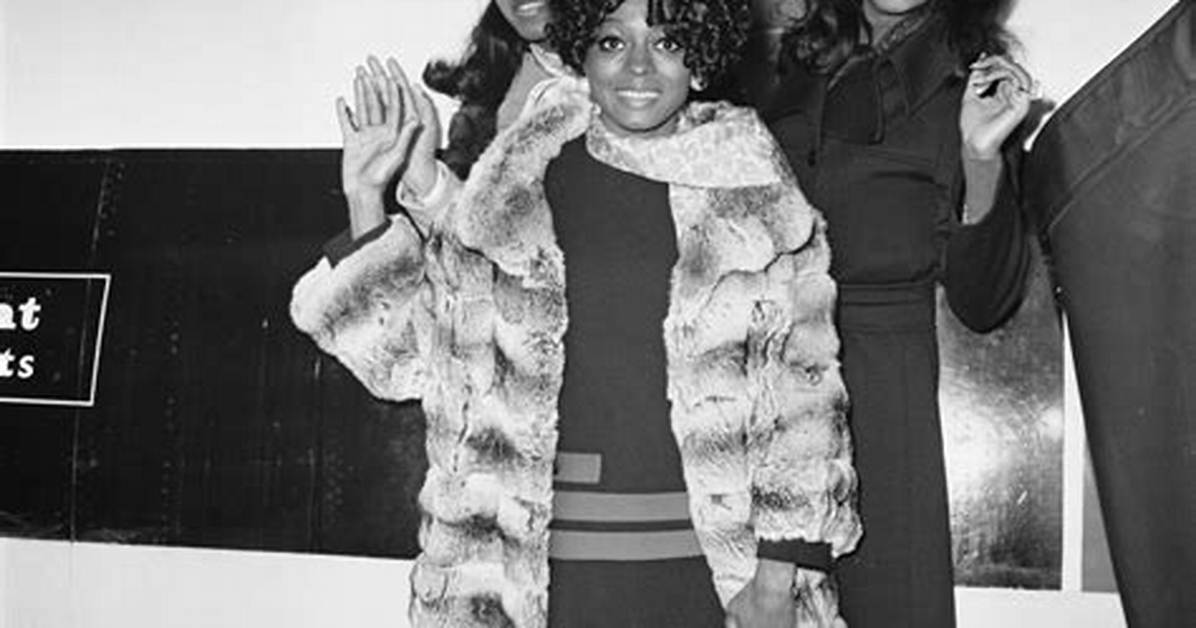
At present, Cindy Birdsong does not have an active romantic partnership. She is presently residing independently. She was previously wed to Charles Hewlett, her longtime romantic partner.
Charles and Cindy were longtime romantic partners before their nuptials. The couple ultimately resolved to formalize their union and exchanged vows in 1970.
Their wedding took place in August in San Francisco, in the presence of their singing companions at the time, Jean Terrell and Mary Wilson.
Cindy entered into matrimony for the first time, while Hewlett had an existing marriage. Two years later, they were bestowed with a son by the name of David.
Their union, alas, endured a brief duration of merely five years. 1975 saw their divorce as a result of irreconcilable differences.
Birdsong embarked on her musical career after a longtime friend made contact with her.
Cindy, who was completing her nursing program, had recently returned to Philadelphia from where she was pursuing her nursing education. In contrast, her former acquaintance Patsy Holt invited her to join their singing ensemble.
After Sundray Tuckers, she joined Holt’s vocal ensemble The Ordrettes in 1960. As the group consisted of individuals in their mid-teens, her age of 20 made her the eldest member of the team at the time.
A year before her wedding, Cindy was returning to her apartment with her partner Charles Hewlett and their mutual acquaintance Howard Meek when she was almost abducted.
The intruder threatened them with a knife, which compelled Cindy to pick them up and place them in the car. She, fortunately, leaped from the vehicle and to safety.
After the incident, Charles Edward Collier contacted law enforcement and voluntarily surrendered four days later. He acknowledged his complete culpability and was willing to face incarceration.
His motives for both Cindy’s abduction and his self-transfer remain unknown. Florence Ballard, a co-founding member of the Supremes, was substituted.
Cindy was approached regarding a possible membership in The Supremes while she was performing with Patti LaBelle & the Blue Belles. She assumed the role of the band’s co-founder, succeeding Florence Ballard.
Despite initial acclaim, Cindy exhibited remarkable skill and garnered widespread admiration. She achieved the distinction of becoming one of the most adored performers in the series.
In her youth, Cindy’s singles were not particularly well received by Supremes fans.
Birdsong faced several challenges in her inexperience with The Supremes. During her initial two and a half years with the band, her singles failed to pique the interest of the audience, who bypassed them on average.
Cindy’s compositions, for which the group recorded three albums with the Four Tops, became more widely recognized after she emerged as a lead member of the newly reformed group under the name Diana Rose, where she displayed her extraordinary ability.
Her interactions with the manager precipitated her departure from the Supremes.
Cindy terminated her tenure with the team in February 1976 after developing a personal rift with the manager. She had no faith in the quality of his labor.
Cindy departed The Supreme to pursue her interest in nursing while working as a nurse at UCLA Medical Center.
Cindy has demonstrated political engagement alongside her professional endeavors as a performer and nurse. Serving the Los Angeles metropolitan area, she was a minister.
She is, nevertheless, retired and no longer engaged in any professional capacity.

